When agents decide to publish
Why publishing is the hardest part of agentic systems — and where most automations quietly break.
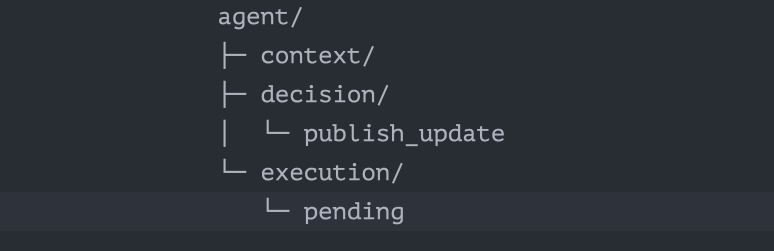
Agents are good at deciding
Agentic systems are getting very good at decisions.
They can read context, evaluate options, summarize inputs, generate text, and choose what should happen next. Whether it is an AI agent, a workflow engine, or a hybrid system, the pattern is the same. Something observes the world, reasons about it, and produces intent.
At that point, many systems feel complete.
They are not.
The last mile problem
Deciding what should be published is not the same as publishing it.
The moment an agent’s decision needs to affect the outside world, the system crosses a boundary. From internal reasoning to external execution. From “this makes sense” to “this actually happened”.
That last mile is where most agentic systems quietly break.
Not because the decision was wrong, but because execution is messy. Platforms behave differently. Some succeed, some fail. Some fail later. Some never report back clearly. The agent has moved on, but the world has not caught up.
Intent is cheap, execution is not
Modern agents can produce intent effortlessly. “Post this update.” “Announce this change.” “Publish this summary.”
Execution is where intent meets reality.
Rate limits. Platform constraints. Partial success. Retries. Delayed outcomes. Silent drops. None of these are visible at the moment the agent makes its decision. They only appear afterwards, when it is already too late to pretend everything went fine.
This is why publishing cannot be treated as a simple tool call in agentic systems.
Why agents need observable outcomes
For an agent, “success” is not a boolean. It is a state.
Did the post actually go out? Where? When? Did it fail somewhere? Is it still processing? Should it retry? Should it escalate to a human? Should it log the outcome and continue?
Without explicit outcomes, agents are blind. They assume the world accepted their decision, even when it didn’t.
This is where many systems lose trust. Not because agents are wrong, but because the system cannot tell what actually happened.
Publishing as a boundary, not an action
In agentic workflows, publishing is not an action. It is a boundary.
On one side, there is reasoning. On the other, there is execution across systems you do not control. Treating publishing as a boundary forces you to model it differently. You submit intent. You observe outcomes. You deal with partial success as a first-class state.
That model scales better than pretending publishing is just another synchronous step.
Where Postproxy fits
Postproxy exists exactly at that boundary.
It does not decide what should be published. It does not generate content. It executes publishing intent and reports back what actually happened, per platform, per account, over time.
For agentic systems, this matters. It gives agents something real to reason about after the decision is made. Not optimistic success, but observable outcomes.
That is the difference between agents that merely decide and systems that can be trusted to act.
Agents don’t need more confidence
One of the risks of agentic systems is overconfidence. Decisions are made quickly. Intent is generated fluently. Without feedback from execution, systems assume the world cooperated.
Publishing breaks that illusion.
It reminds us that the world is asynchronous, fragmented, and often uncooperative. Good systems don’t hide that. They expose it.
The real challenge of agentic publishing
The hardest part of agentic publishing is not intelligence. It is follow-through.
A system that can decide but cannot reliably execute is incomplete. A system that executes but cannot observe outcomes is dangerous.
Agentic systems need publishing infrastructure that treats execution as a first-class problem. Not as an afterthought, and not as a UI task.
That last mile is where agents either become useful, or quietly fail.
Postproxy
One API for every social platform
Publish to Instagram, X, LinkedIn, TikTok, YouTube and more with a single request. Free plan, no credit card required.