

Postproxy is the perfect interface between our internal tools and the platforms we post to. People underestimate how much effort it takes to keep those connections running smoothly. Postproxy just handles it.
Rabe Marketing runs social media for local businesses around Lübeck across Instagram, LinkedIn, TikTok, and Google Business Profiles. Instead of renting a stack of tools that never quite fit agency work, founder Sven Rabe built his own client workspace and used Postproxy for everything underneath it.

Sven Rabe
Founder, Rabe Marketing
Running several client accounts meant a scheduler in one tab, platform analytics in another, a separate app just to repost old content, and audience conversations stuck inside the native apps. No single view of what went out, how it did, and who was waiting on a reply.
Build an internal workspace shaped around the agency's own client workflow, and use Postproxy as the single API layer to Instagram, LinkedIn, TikTok, and Google Business Profiles instead of maintaining platform integrations and subscribing to a stack of point tools.
Rabe Marketing works with businesses around Lübeck: restaurants, hospitality brands, and local companies that need to show up where their customers already spend their evenings. The work is content, automation, and talking to an audience that talks back, now across Instagram, LinkedIn, TikTok, and Google Business Profiles.
Agency work has a shape that most social tools ignore. Several clients, each with their own accounts, tone, calendar, and reporting expectations. Most products assume one brand and one team, then charge per seat for the privilege of splitting the difference.
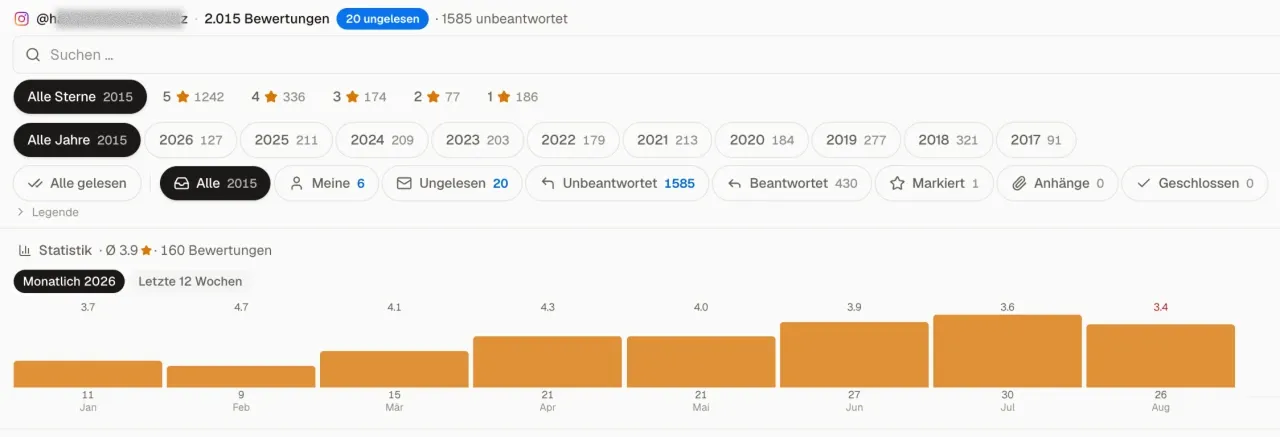
Before the workspace, a typical day looked like this: schedule in one tool, pull numbers from another, open a third just to repost an old Reel, and answer comments in the native apps on a phone. Nothing was connected. Every client review meant stitching the picture back together by hand.
So Sven built the workspace his agency actually needed, with the client at the centre and the platforms underneath, and put Postproxy in as the connection layer instead of maintaining those integrations himself.
A workspace is only as good as the connections underneath it, and that is where agency-built tools usually die.
Instagram, LinkedIn, TikTok, and Google Business Profiles each have their own authentication flows, permissions, publishing rules, response formats, and failure states. Tokens expire. Platform behaviour changes with no warning. A rejected post still has to surface an error a marketer can act on, because a client's launch does not wait for a debugging session.
Maintaining all of that directly would have turned a marketing agency into a software maintenance operation. Every hour spent on token refresh logic is an hour not spent on client work, and an agency bills for the second one.
Postproxy sits between the workspace and the platforms. Sven owns the client experience and the workflow; Postproxy owns account connections, platform-specific execution, and the maintenance that never stops.
Building against it was the quick part. Sven worked straight from the API documentation, raised questions and feature ideas as daily use turned them up, and the ones that mattered shipped fast. He has been on Postproxy since the early days, so the workspace has grown out of real agency use rather than guesswork.
Postproxy is the perfect interface between our internal tools and the platforms we post to. People underestimate how much effort it takes to keep those connections running smoothly. Postproxy just handles it.
The workspace follows a post through its whole life inside the client account, which is how agency work is actually reviewed and billed.
Sven can publish to a client profile, watch how the post performs, open the comment thread it generated, and answer from the same screen. The post, the profile, the numbers, and the conversation stay attached to each other instead of living in four different products.
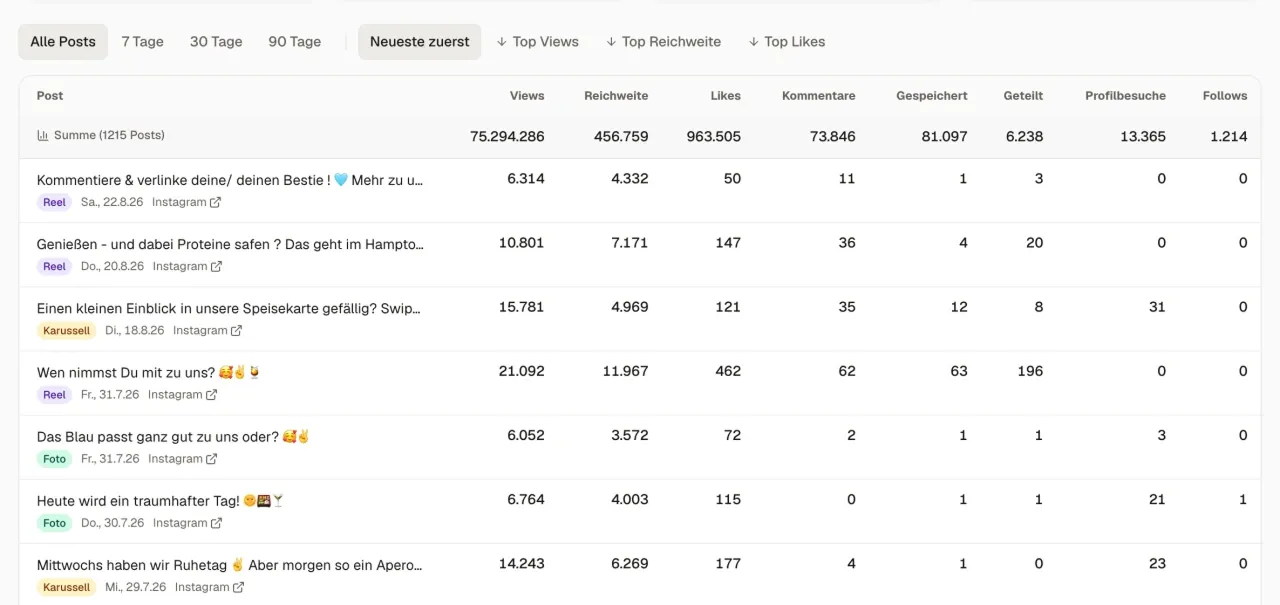
Publishing runs through one API call per client account, whether the post is headed to Instagram, LinkedIn, TikTok, or a Google Business Profile. Adding a brand to the roster means connecting profiles, not writing another integration.
Performance data comes back into the same record as the post, clean enough to report from directly. A client Reel's impressions sit beside its comment thread, in the workspace, not pasted into a monthly deck from a second analytics tool. That reach is the client's result; the point for the agency is seeing it without leaving the screen.
A Reel that pulls a busy comment thread is only a win if someone answers. Comments sync into the client view and replies go back out through the same layer, so engagement is real agency work, not a chore left for the phone.
A post that worked once can work again. Sven reposts old Reels straight from Postproxy, so proven content goes back into rotation without a separate repurposing tool in the stack. One of the apps the agency used to pay for is simply gone.
I can repost my old Reels straight from Postproxy, so I dropped the separate repost tool I was paying for. The more of my stack Postproxy covers, the fewer logins sit between me and a client's feed.
The setup scales the way an agency grows. Taking on a client means connecting their accounts, not scoping an integration. Adding a platform means one more endpoint, not one more project with a maintenance tail.
That keeps the agency's own product moving: new workflows, better client reporting, more automation around the parts Sven's clients actually see.
Rabe Marketing now runs client social media through a workspace built around its own processes, on infrastructure it does not have to maintain.
Postproxy makes that setup practical:
Use Postproxy for account connections, publishing, reposting, engagement, and analytics across every client and platform.